TRT and Hematocrit: Why Your Provider Watches Your Red Blood Cells
Testosterone raises red blood cell production in nearly every man who takes it. Here is how much, which thresholds guidelines use, and how monitoring works.
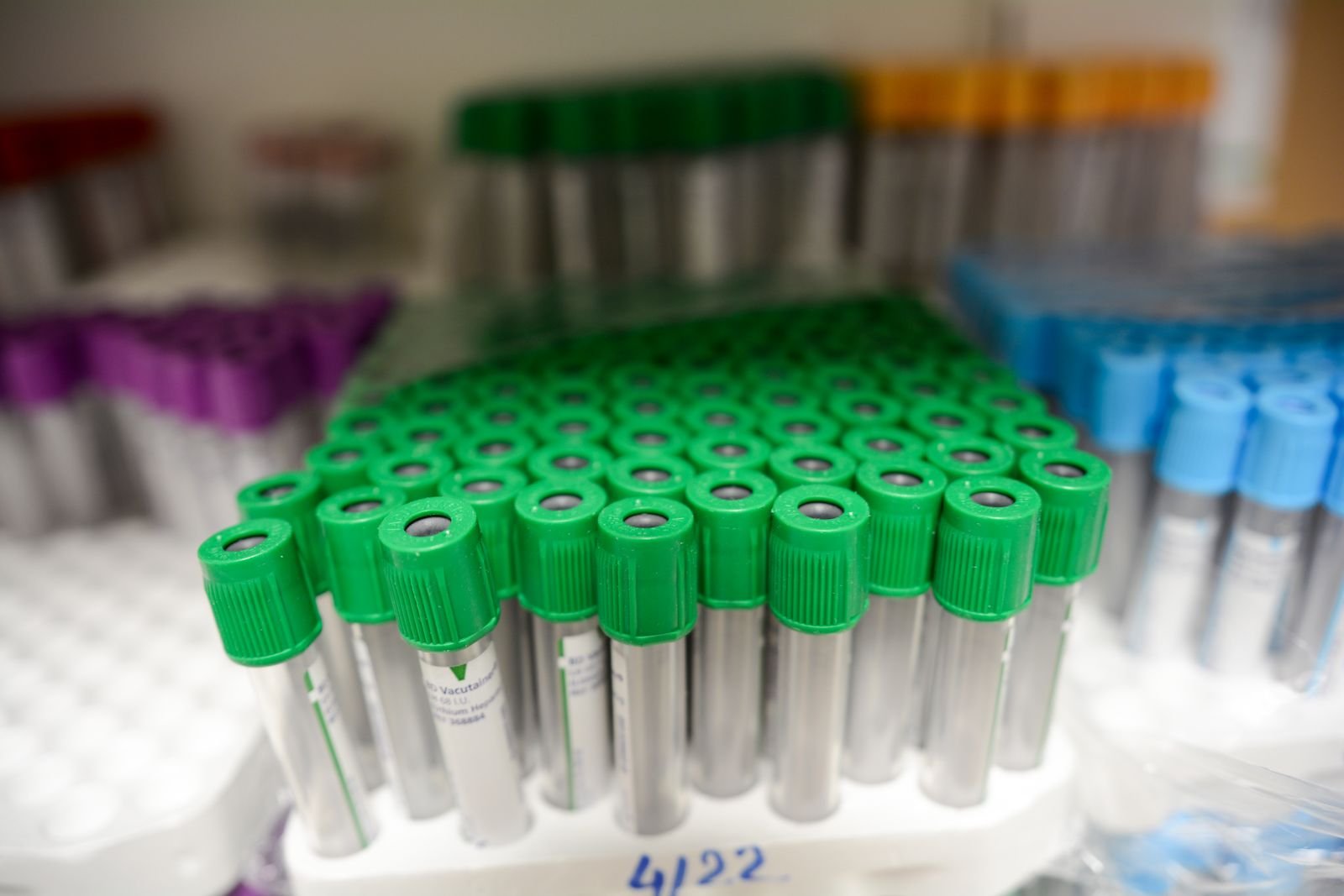
Testosterone therapy raises hematocrit, the share of your blood made up of red blood cells, and it does so with every formulation studied. Across 29 placebo-controlled trials, injectable testosterone cypionate or enanthate raised hematocrit by about 4 percentage points compared with placebo. The Endocrine Society’s guideline treats a hematocrit above 54% during treatment as a reason to pause therapy, which is why TRT hematocrit is checked at baseline, at 3 to 6 months and then every year.
For most men the rise is modest and stays within range. For some it climbs high enough to need action. Knowing your baseline, your formulation and the thresholds your provider uses makes those check-ins easier to follow, and helps you understand why a lab result might change your plan.
Key takeaways
- Testosterone raises erythropoietin and suppresses hepcidin, which together boost red cell production and iron use.
- Endocrine Society thresholds: baseline above 48% (above 50% at high altitude) argues against starting; above 54% on treatment means stopping until it falls.
- In a network meta-analysis, injectable cypionate or enanthate raised hematocrit 4.0 points vs placebo, gel 3.0 points and patches 1.4 points.
- Higher BMI and higher baseline hematocrit predicted larger rises in one clinical cohort; sleep apnea and hypoxia are evaluated when hematocrit is high.
- Observational data link hematocrit of 52% or more in the first year of therapy with more cardiovascular and clotting events.
Why TRT raises hematocrit
Hematocrit is the percentage of blood volume taken up by red blood cells. Reference ranges for adult men differ from lab to lab. When hematocrit rises well above normal on testosterone, it is called erythrocytosis (sometimes called secondary polycythemia).
Testosterone acts on two levers that control red cell production:
- Erythropoietin (EPO). The kidney hormone that tells bone marrow to make red cells.
- Hepcidin. A liver hormone that limits how much iron is absorbed and released for red cell production. Less hepcidin means more iron available to the marrow.
Bachman et al. (2010) found that serum hepcidin fell within a week of starting testosterone enanthate, and that greater hepcidin suppression tracked with a greater hematocrit rise in older men. In a follow-up randomized trial (Bachman et al., 2014), older men with mobility limitation used testosterone gel or placebo for six months. On testosterone, hemoglobin rose about 7% and hematocrit about 10%. EPO rose and hepcidin fell at one and three months. By six months both had drifted back toward baseline, yet EPO was not suppressed even though hemoglobin stayed higher. The authors described this as a new EPO/hemoglobin set point: testosterone resets the level of red cells the body treats as normal.
The Endocrine Society notes that hemoglobin rises more with testosterone in older men than in younger hypogonadal men. In the TTrials of older men, 7 men on testosterone reached a hemoglobin of 17.5 g/dL or higher, compared with none on placebo.
TRT hematocrit thresholds in the guidelines
The Endocrine Society’s 2018 guideline (Bhasin et al.) sets two numbers:
- Before starting: a hematocrit above 48% (above 50% for men living at high altitude) is listed among conditions with a moderate-to-high risk of adverse outcomes, where testosterone is not recommended. Men whose baseline is above their lab’s upper limit need a discussion of erythrocytosis risk and closer monitoring.
- During treatment: a hematocrit above 54% means stopping therapy until hematocrit comes back down, evaluating for hypoxia and sleep apnea, and restarting at a reduced dose. Therapeutic phlebotomy is another option the guideline mentions.
Other bodies set their action points differently, and individual providers may act earlier than 54%, so ask which threshold your provider uses. For context, the large TRAVERSE cardiovascular safety trial excluded men whose hematocrit was above 50% at enrollment.
What your numbers mean
A general guide based on the Endocrine Society thresholds. Lab reference ranges vary, and a licensed provider interprets results alongside your symptoms, history and formulation.
| Hematocrit | Timing | How guidelines view it |
|---|---|---|
| Within your lab’s normal range | Before treatment | No hematocrit-related barrier to starting; this becomes your baseline for comparison |
| Above lab upper limit, up to 48% | Before treatment | Discussion of erythrocytosis risk and closer monitoring |
| Above 48% (above 50% at high altitude) | Before treatment | Testosterone not recommended until the cause is evaluated |
| Rising but 54% or below | On treatment | Expected to some degree; tracked at scheduled checks. Some providers act at lower levels |
| Above 54% | On treatment | Stop until it falls, evaluate for sleep apnea and low oxygen, restart at a lower dose if resumed |
Hematocrit can read higher if you are dehydrated at the time of the draw, so a single high value is often repeated before decisions are made.
How much each testosterone form raises hematocrit
Nackeeran et al. (2022, Journal of Urology) pooled 29 placebo-controlled randomized trials covering 3,393 men in a network meta-analysis comparing routes of testosterone:
| Route | Mean hematocrit increase vs placebo (95% CI) |
|---|---|
| Oral testosterone undecanoate | 4.3 points (0.7 to 8.0) |
| Intramuscular cypionate or enanthate | 4.0 points (2.9 to 5.1) |
| Transdermal gel | 3.0 points (1.8 to 4.3) |
| Intramuscular undecanoate | 1.6 points (0.3 to 3.0) |
| Transdermal patch | 1.4 points (0.2 to 2.6) |
Every route raised hematocrit. The only statistically significant head-to-head difference was intramuscular cypionate or enanthate versus the patch; the analysis did not detect a significant difference between injections and gel. Averages also hide the spread. A 4-point average rise means some men barely move and others rise much more.
Real-world cohorts show how often hematocrit crosses thresholds. In a retrospective Swiss clinic study (Neidhart et al., 2025), 23% of men on testosterone reached a hematocrit above 50% and 5% reached above 54% during follow-up. Higher BMI and higher baseline hematocrit were significantly associated with higher on-treatment values, smoking showed a trend, and the authors noted erythrocytosis did not only appear in the first year. Most men in that cohort used injectable undecanoate, so the figures may not transfer directly to other formulations.
If you use testosterone cypionate, the injectable form with one of the larger average effects, regular hematocrit checks are a standard part of care.
Does a high hematocrit on TRT cause clots or heart problems?
The concern is that thicker blood flows less easily. The evidence is suggestive rather than settled:
- Observational data. Ory et al. (2022) used a multi-institution database and matched 5,842 men who developed a hematocrit of 52% or more on testosterone therapy with 5,842 men on therapy whose hematocrit stayed normal. In the first year, major adverse cardiovascular events or venous blood clots occurred in 5.15% versus 3.87% (odds ratio 1.35). As an observational study, it shows an association, not proof that hematocrit caused the events.
- TRAVERSE. The largest randomized trial (Lincoff et al., 2023, NEJM) enrolled 5,246 men aged 45 to 80 with low testosterone (two fasting levels below 300 ng/dL) and existing or high-risk cardiovascular disease. Men used daily 1.62% testosterone gel or placebo gel for a mean of 21.7 months. Major cardiovascular events occurred in 7.0% on testosterone and 7.3% on placebo (hazard ratio 0.96), meeting the trial’s noninferiority goal. Pulmonary embolism (0.9% vs 0.5%), atrial fibrillation (3.5% vs 2.4%) and acute kidney injury (2.3% vs 1.5%) were more frequent with testosterone.
TRAVERSE used a gel, excluded men with a baseline hematocrit above 50%, and monitored participants. Its findings are reassuring for that setting but do not answer how injectable therapy with larger hematocrit rises compares, which is one reason guideline-based monitoring remains the standard.
The TRT hematocrit monitoring schedule
The Endocrine Society’s monitoring plan for men on testosterone therapy:
| When | What is checked |
|---|---|
| Baseline | Hematocrit, total testosterone (two morning tests), PSA and prostate assessment for men who choose prostate monitoring |
| 3 to 6 months | Hematocrit; testosterone level, aiming for mid-normal; symptoms and side effects |
| 3 to 12 months | PSA and digital rectal exam for men who choose prostate monitoring |
| 12 months, then annually | Hematocrit and testosterone; response and adverse effects |
Testosterone levels on therapy are timed to the formulation (for injections, midway between doses), as described in why your testosterone test has to be done in the morning. A hematocrit that rises between scheduled checks may lead your provider to check sooner.
If your hematocrit gets too high
Under the Endocrine Society guideline, a hematocrit above 54% leads to three steps: hold testosterone until hematocrit comes back down, look for contributing causes, and resume, if at all, at a lower dose. Any change to your treatment is a decision for your licensed provider; do not stop, skip or change doses on your own.
The contributing causes are worth checking even before 54%:
- Sleep apnea and low oxygen. The guideline specifically calls for evaluating hypoxia and sleep apnea. Untreated severe sleep apnea is also a reason the guideline gives not to start testosterone. See sleep, sleep apnea and testosterone.
- Smoking. Showed a trend toward higher on-treatment hematocrit in the Neidhart cohort.
- Body weight. Higher BMI predicted higher hematocrit in the same cohort.
- Altitude. The reason the baseline threshold is 50% rather than 48% at high altitude.
For men whose hematocrit is a recurring problem, or who also want to protect fertility, some licensed providers discuss approaches that raise the body’s own testosterone instead of replacing it. Enclomiphene is one; it is not FDA-approved, is compounded when prescribed in the US, and compounded medications are not FDA-reviewed for safety, effectiveness or quality. The fertility comparison is in enclomiphene vs. TRT. Whether testosterone therapy is appropriate at all starts with a confirmed diagnosis, covered in what counts as low testosterone.
Questions to ask your provider
- What was my baseline hematocrit, and what is my current value?
- At what hematocrit would you change my plan: 50%, 52% or 54%?
- Should I be screened for sleep apnea before or during therapy?
- Does my formulation or schedule affect how much my hematocrit rises?
- How often should we check hemoglobin and hematocrit in my first year?
Frequently asked questions
What is a normal hematocrit on TRT?
Some rise above your baseline is expected. The Endocrine Society’s action point during treatment is above 54%, though individual providers may act earlier. Your own lab’s reference range and your baseline are the best comparison.
Is a hematocrit of 52% on testosterone too high?
It is below the Endocrine Society’s 54% cutoff but above the 52% level that Ory 2022 linked to more cardiovascular and clotting events in the first year. Many providers would repeat the test and look for contributors such as sleep apnea or smoking.
Do injections raise hematocrit more than gel?
On average injections of cypionate or enanthate raised it more (4.0 vs 3.0 points vs placebo), but in the Nackeeran meta-analysis the difference between injections and gel was not statistically significant. Injections did raise it significantly more than patches.
How soon does hematocrit rise on TRT?
Hepcidin fell within a week of starting testosterone in Bachman 2010, and the guideline’s first on-treatment check is at 3 to 6 months. Elevated values can also appear after the first year.
If you are on testosterone or considering it and want your hematocrit and other labs reviewed, you can book a free consultation with a licensed provider from our clinical partner, The Tide Clinic. Learn more about the men’s testosterone program.
References
- Bhasin S, Brito JP, Cunningham GR, et al. Testosterone Therapy in Men With Hypogonadism: An Endocrine Society Clinical Practice Guideline. J Clin Endocrinol Metab. 2018;103(5):1715-1744. https://doi.org/10.1210/jc.2018-00229
- Nackeeran S, Kohn T, Gonzalez D, et al. The Effect of Route of Testosterone on Changes in Hematocrit: A Systematic Review and Bayesian Network Meta-Analysis of Randomized Trials. J Urol. 2022;207(1):44-51. https://doi.org/10.1097/JU.0000000000002188
- Bachman E, Travison TG, Basaria S, et al. Testosterone induces erythrocytosis via increased erythropoietin and suppressed hepcidin: evidence for a new erythropoietin/hemoglobin set point. J Gerontol A Biol Sci Med Sci. 2014;69(6):725-735. https://doi.org/10.1093/gerona/glt154
- Bachman E, Feng R, Travison T, et al. Testosterone suppresses hepcidin in men: a potential mechanism for testosterone-induced erythrocytosis. J Clin Endocrinol Metab. 2010;95(10):4743-4747. https://doi.org/10.1210/jc.2010-0864
- Ory J, Nackeeran S, Balaji NC, Hare JM, Ramasamy R. Secondary Polycythemia in Men Receiving Testosterone Therapy Increases Risk of Major Adverse Cardiovascular Events and Venous Thromboembolism in the First Year of Therapy. J Urol. 2022;207(6):1295-1301. https://doi.org/10.1097/JU.0000000000002437
- Lincoff AM, Bhasin S, Flevaris P, et al. Cardiovascular Safety of Testosterone-Replacement Therapy (TRAVERSE). N Engl J Med. 2023;389(2):107-117. https://doi.org/10.1056/NEJMoa2215025
- TRAVERSE study record, eligibility criteria. ClinicalTrials.gov NCT03518034. https://clinicaltrials.gov/study/NCT03518034
- Neidhart A, von Wyl V, Käslin B, Henzen C, Fischli S. Prevalence and predictive factors of testosterone-induced erythrocytosis: a retrospective single center study. Front Endocrinol (Lausanne). 2025;15:1496906. https://doi.org/10.3389/fendo.2024.1496906
This article is for education only and is not medical advice. It does not replace an evaluation by a licensed provider, who can tell you whether any test or treatment is appropriate for you. Enclomiphene is not FDA-approved. Compounded medications are not FDA-reviewed for safety, effectiveness, or quality. Results vary.