IGF-1 Levels in Men: What Your Number Means and Why Providers Track It
What IGF-1 measures, real age-specific ranges for men, why the same blood can read differently on two assays, what low or high results can mean, and why it is monitored.
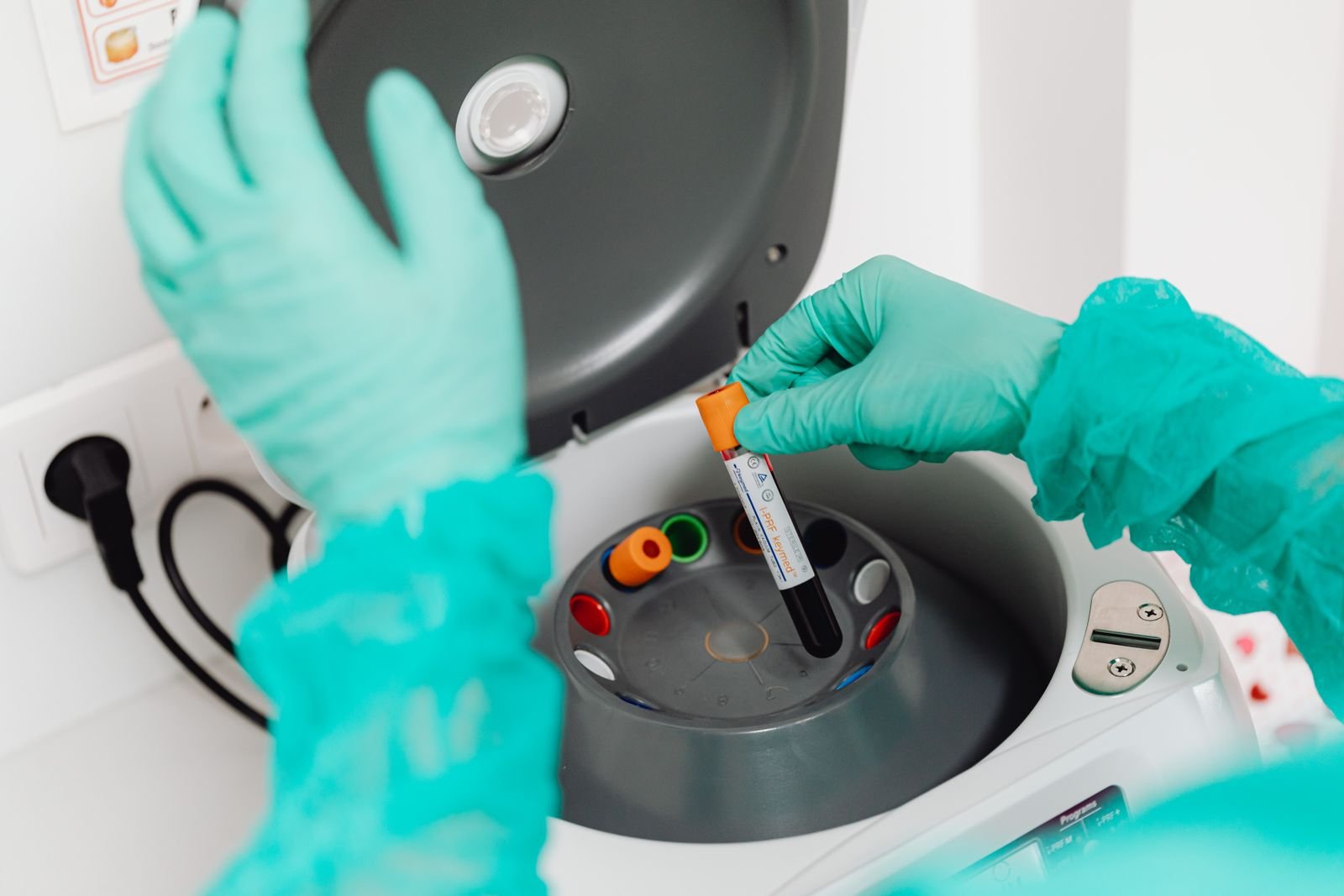
IGF-1 levels are a blood measure of how much growth hormone (GH) activity your body has had over recent days, because the liver makes IGF-1 in response to GH and, unlike GH, IGF-1 stays fairly steady through the day. There is no single normal number for men: IGF-1 falls steadily with age and depends on which lab test is used. In a French study of healthy adults, the normal range for men aged 30 to 39 was about 108 to 265 ng/mL on one common assay but 118 to 348 ng/mL on another, and by age 70 to 89 it had fallen to 64 to 192 ng/mL on the first.
So “my IGF-1 is 140” means little until you know your age, the assay, and why it was measured. Below is how to read the number, what can push it low or high, and when it actually matters. If your IGF-1 was drawn alongside testosterone labs, the same rule applies as for any hormone: one result is a snapshot, and an unexpected value is worth discussing (and often repeating) before anyone acts on it.
Key takeaways
- IGF-1 peaks around puberty (age 15 in one 15,014-person reference study) and declines continuously after that.
- Six commercial assays measured in the same 911 healthy adults gave noticeably different upper limits. Interpret your result against your lab’s own age-specific range.
- A low IGF-1 is not a diagnosis. Poor nutrition, liver disease, poorly controlled diabetes and oral estrogen can lower it.
- A normal IGF-1 does not rule out GH deficiency, according to the Endocrine Society.
- In about 200,000 UK men, higher IGF-1 was linked to higher prostate cancer risk, one reason providers track it on any GH-axis therapy.
What IGF-1 is and why it is measured instead of GH
Your pituitary releases GH in bursts, with the biggest one usually shortly after you fall asleep. A random GH level can therefore be near zero in a healthy man or high in someone who just had a pulse, which is why guidelines do not use random GH to screen adults. GH stimulates the liver to make insulin-like growth factor 1, which circulates bound to carrier proteins and changes slowly. That makes IGF-1 the practical “average” readout of GH activity.
IGF-1 also feeds back on the pituitary to restrain GH. And it is influenced by more than GH: nutrition, liver function, insulin and sex hormones all affect it. Testosterone is one example. In a randomized trial in older men (Muniyappa 2007), 26 weeks of testosterone injections raised IGF-1 by 22% vs. placebo (more in does growth hormone raise testosterone?).
IGF-1 levels in men by age: what the reference ranges look like
The table below shows 2.5th to 97.5th percentile ranges for men from Chanson et al. (JCEM, 2016), who measured IGF-1 in a random sample of healthy French adults using six commercial assays. Two assays are shown to illustrate how much the method matters.
| Age (men) | iSYS assay (ng/mL) | IMMULITE 2000 assay (ng/mL) |
|---|---|---|
| 21-23 | 147-346 | 171-477 |
| 27-29 | 122-292 | 138-396 |
| 30-39 | 108-265 | 118-348 |
| 40-49 | 91-233 | 98-301 |
| 50-59 | 81-214 | 85-273 |
| 60-69 | 75-208 | 77-260 |
| 70-89 | 64-192 | 66-242 |
Notice the pattern the authors highlighted: the lower limits were similar across assays, but the upper limits varied markedly. A 45-year-old man with an IGF-1 of 260 ng/mL would be above range on the iSYS assay and comfortably within range on IMMULITE. Agreement between assays in classifying results was only moderate to good. A later study in the same cohort found the same issue with two newer assays.
Do not compare your result with this table as if it were your lab’s range. Use the range printed on your own report, and if you are tracking IGF-1 over time, try to use the same lab each time.
Why IGF-1 levels fall with age
The decline tracks the fall in GH output. In a review of sleep and GH physiology, Van Cauter and Plat noted that total 24-hour GH secretion drops two- to threefold during the fourth decade of life (ages 30 to 40). In a pooled analysis of 149 healthy men (Van Cauter 2000), GH secretion fell by about 372 micrograms per decade from early adulthood to midlife, in parallel with a steep loss of deep slow-wave sleep, then declined more slowly after that. Much of adult GH is released in the first deep-sleep period of the night, which is why sleep keeps coming up in GH discussions (see growth hormone and sleep). The practical point: an IGF-1 that is lower at 50 than it was at 25 is the expected pattern, which is exactly why ranges are age-specific.
SDS: the number specialists actually use
Endocrinologists often convert IGF-1 into a standard deviation score (SDS, or z-score) for your age and sex on that specific assay. An SDS of 0 is average for your age; a score below -2 sits in roughly the bottom few percent of healthy men your age. This is the number used in diagnostic rules. For example, a 2023 review of GH-deficiency testing describes adults with three or more other pituitary hormone deficiencies, an IGF-1 SDS below -2 and a history of a pituitary mass, surgery or radiation as having a greater than 95% likelihood of GH deficiency.
What a low IGF-1 level can mean
In a healthy man, a result in the lower part of the age range is common and, by itself, not a problem. A result below the range has several possible explanations:
- GH deficiency, usually from pituitary or hypothalamic disease, surgery or radiation.
- Catabolic or metabolic states: poorly controlled diabetes, liver disease and malnutrition (named in the Endocrine Society guideline), plus anorexia, type 1 diabetes and kidney disease (listed in a 2023 review).
- Oral estrogen, which induces relative GH resistance.
The Endocrine Society’s 2011 guideline treats a low IGF-1 as strong evidence of significant GH deficiency only when those other causes are absent, and only in the right clinical context. It also states that a normal IGF-1 “does not exclude the diagnosis” of GH deficiency, so stimulation testing is required when deficiency is suspected. The 2023 review adds that IGF-1 values overlap between healthy and GH-deficient people, especially after age 40. Obesity is a particular trap: GH output falls in obesity while IGF-1 can be normal or even higher. Our guide to adult growth hormone deficiency covers the stimulation tests.
What a high IGF-1 level can mean
A result above your lab’s age range has a short list of explanations:
- GH or GH-axis therapy: somatropin, or a GH-releasing drug, at a level that pushes IGF-1 past the age range. In one trial in adults with GH deficiency (Schneider 2005), IGF-1 rose in all patients on GH replacement, partly into the supraphysiologic range.
- GH excess from the pituitary, which is uncommon but important. IGF-1 measurement is a cornerstone of diagnosing and monitoring GH-related disorders, so a persistently high result without an obvious cause needs follow-up.
- Assay differences: as the table shows, the same blood can be “high” on one assay and normal on another.
Long-term exposure to higher IGF-1 is the reason for caution. In UK Biobank (Watts 2021, about 200,000 men followed for a mean of 6.9 years), each 5 nmol/L higher IGF-1 was associated with a 9% higher risk of a prostate cancer diagnosis and a 15% higher risk of prostate cancer death. A genetic (Mendelian randomization) analysis in the same paper also supported a causal role for IGF-1 in prostate cancer. These are associations within the natural range, not trials of IGF-raising drugs, but they explain why providers do not chase a “higher is better” IGF-1.
Why providers track IGF-1 levels
On somatropin for diagnosed GH deficiency
IGF-1 is the main dose-adjustment marker. In the Giannoulis 2006 trial in older men, for example, GH doses were titrated over 8 weeks to keep IGF-1 in the upper half of the age-specific range. Guidelines individualize dosing and start lower in older adults, who are more prone to side effects such as fluid retention and joint pain.
On sermorelin
Sermorelin works upstream, by prompting your pituitary to release GH, so IGF-1 is the simplest way to see whether it is doing anything. Responses vary. In preliminary results from a University of Washington trial, older men on nightly sermorelin (Geref) had about a 40% rise in IGF-1; in a separate 6-week study of 11 older men (Vittone 1997), IGF-1 did not change. Sermorelin prescribed today is compounded and not FDA-approved; Geref, the approved brand, was discontinued in 2008. See sermorelin vs. HGH and our sermorelin page. It is prescribed only if a licensed provider decides it is appropriate.
When combining therapies
Testosterone raises IGF-1 on its own: in one randomized trial in men 65 and older with low testosterone (Dias 2017), 6 months of testosterone gel raised IGF-1 by about 15 ng/mL vs. placebo. When testosterone therapy and a GH-axis drug are used together, both can push IGF-1 up, and no dedicated trials show how they add together. That is a reason for a baseline and follow-up IGF-1, alongside glucose and HbA1c. Our article on labs to monitor when combining therapies lays out a full panel.
Questions to ask your provider about your IGF-1
- Which assay was used, and what is the age-specific range for that lab?
- What is my IGF-1 SDS?
- Could diet, weight loss, liver function or diabetes control explain a low result?
- Is there anything in my history that makes true GH deficiency or GH excess likely enough to test for?
- If I am on a GH-axis therapy, what IGF-1 target are we using, and what would prompt a dose change or stopping?
Frequently asked questions
What is a normal IGF-1 level for a 40-year-old man?
It depends on the assay. In one large reference study, the range for men aged 40 to 49 was 91 to 233 ng/mL on the iSYS assay and 98 to 301 ng/mL on IMMULITE 2000. Use the range on your own lab report.
Does low IGF-1 mean I have growth hormone deficiency?
Not by itself. Poor nutrition, liver disease, poorly controlled diabetes and oral estrogen can lower IGF-1, and the diagnosis of adult GH deficiency usually requires a stimulation test in someone with a reason to suspect pituitary disease.
Is a higher IGF-1 better?
No. In large observational studies, higher IGF-1 within the normal range was associated with higher prostate cancer risk, and IGF-1 above the age range can signal GH excess or overtreatment.
Why did my IGF-1 change when I switched labs?
Different commercial assays give different results on the same blood, especially at the upper end. Comparing results across labs can be misleading; the SDS for each assay is more comparable than the raw number.
If you have an IGF-1 result you are unsure about, or are considering a therapy that affects it, you can book a free consultation with a licensed provider from our clinical partner, The Tide Clinic, to go over it in context.
References
- Chanson P, Arnoux A, Mavromati M, et al. Reference values for IGF-I serum concentrations: comparison of six immunoassays. J Clin Endocrinol Metab. 2016;101(9):3450-3458. PMC
- Sabbah N, Wolf P, Piedvache C, et al. Reference values for IGF-I serum concentration in an adult population: use of the VARIETE cohort for two new immunoassays. Endocr Connect. 2021;10(9):1027-1034. PubMed
- Bidlingmaier M, Friedrich N, Emeny RT, et al. Reference intervals for insulin-like growth factor-1 (IGF-I) from birth to senescence. J Clin Endocrinol Metab. 2014;99(5):1712-1721. PubMed
- Molitch ME, Clemmons DR, Malozowski S, et al. Evaluation and treatment of adult growth hormone deficiency: an Endocrine Society clinical practice guideline. J Clin Endocrinol Metab. 2011;96(6):1587-1609. PubMed
- Yuen KCJ, Johannsson G, Ho KKY, et al. Diagnosis and testing for growth hormone deficiency across the ages: a global view of the accuracy, caveats, and cut-offs for diagnosis. Endocr Connect. 2023;12(7):e220504. PMC
- Watts EL, Fensom GK, Smith Byrne K, et al. Circulating insulin-like growth factor-I, total and free testosterone concentrations and prostate cancer risk in 200 000 men in UK Biobank. Int J Cancer. 2021;148(9):2274-2288. PubMed
- Muniyappa R, Sorkin JD, Veldhuis JD, et al. Long-term testosterone supplementation augments overnight growth hormone secretion in healthy older men. Am J Physiol Endocrinol Metab. 2007;293(3):E769-E775. PubMed; Dias JP, et al. Metabolism. 2017;69:143-147. PubMed
- Van Cauter E, Leproult R, Plat L. Age-related changes in slow wave sleep and REM sleep and relationship with growth hormone and cortisol levels in healthy men. JAMA. 2000;284(7):861-868. PubMed; Van Cauter E, Plat L. Physiology of growth hormone secretion during sleep. J Pediatr. 1996;128(5 Pt 2):S32-S37. PubMed
- Giannoulis MG, Sonksen PH, Umpleby M, et al. The effects of growth hormone and/or testosterone in healthy elderly men: a randomized controlled trial. J Clin Endocrinol Metab. 2006;91(2):477-484. PubMed
- Schneider HJ, Oertel H, Murck H, et al. Night sleep EEG and daytime sleep propensity in adult hypopituitary patients with growth hormone deficiency before and after six months of growth hormone replacement. Psychoneuroendocrinology. 2005;30(1):29-37. PubMed
- Vitiello MV, Schwartz RS, Moe KE, Mazzoni G, Merriam GR. Treating age-related changes in somatotrophic hormones, sleep, and cognition. Dialogues Clin Neurosci. 2001;3(3):229-236. PMC; Vittone J, et al. Metabolism. 1997;46(1):89-96. PubMed
- FDA. Federal Register notice on GEREF (sermorelin acetate), March 4, 2013. govinfo.gov
This article is for education only and is not medical advice. It does not replace an evaluation by a licensed provider, who can tell you whether any test or treatment is appropriate for you. Enclomiphene is not FDA-approved. Compounded medications are not FDA-reviewed for safety, effectiveness, or quality. Results vary.