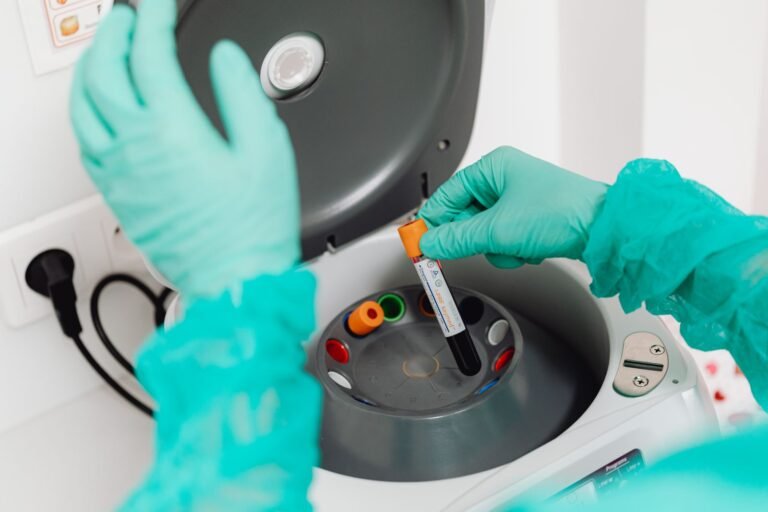
Adult Growth Hormone Deficiency: How It Is Diagnosed and Who Actually Has It
Who actually develops adult growth hormone deficiency, why symptoms and IGF-1 alone cannot diagnose it, and how the ITT, glucagon and macimorelin tests and cutoffs work.

Adult growth hormone deficiency (AGHD) is a specific, uncommon diagnosis, found mostly in people with pituitary or hypothalamic disease (tumors, pituitary surgery or radiation), in people who had GH deficiency as children, and occasionally after significant brain injury. It is confirmed with a growth hormone stimulation test, such as the insulin tolerance test, the glucagon test or the oral macimorelin test, not by symptoms or a single low IGF-1. In a Danish nationwide registry study, new adult-onset cases occurred in about 1.9 per 100,000 men per year.
That is very different from the normal decline in GH that every man goes through after his 20s, which is sometimes marketed as a “deficiency.” Knowing the difference protects you from two mistakes: missing a real pituitary problem, and being treated for a disease you do not have.
Key takeaways
- Guidelines recommend testing only when there is a probable cause, such as known pituitary disease or childhood GH deficiency, and an intent to treat.
- Fatigue, weight gain or low energy without a history of pituitary or hypothalamic disease is not a reason to test.
- A normal IGF-1 does not rule out AGHD, and a low IGF-1 has other causes.
- Obesity lowers stimulated GH, so overweight adults can falsely “fail” a test unless BMI-adjusted cutoffs are used.
- FDA-approved somatropin products are labeled for adults with GH deficiency. GH is not approved for aging, and distributing it for unapproved uses is a federal crime.
Who actually has adult growth hormone deficiency
The Endocrine Society’s 2011 guideline (Molitch et al.) says adults should be considered for evaluation if they have:
- Hypothalamic or pituitary disease, such as a pituitary adenoma or craniopharyngioma.
- Surgery or radiation therapy to the pituitary or hypothalamus.
- Head trauma.
- Deficiencies of other pituitary hormones.
- GH deficiency in childhood, in which case retesting as an adult is usually needed.
The guideline describes idiopathic adult-onset GH deficiency (no identifiable cause) as very rare and suggests two different stimulation tests before diagnosing it. A 2024 review of adult GH deficiency notes that adult-onset cases most often come from hypothalamic-pituitary tumors and their treatment, with non-tumor causes including traumatic brain injury, subarachnoid hemorrhage, stroke and central nervous system infections. A 2023 review adds that pituitary adenomas and craniopharyngiomas account for more than half of adult cases.
How common is it?
Stochholm and colleagues used Danish national registries to identify every GH-deficiency case from 1980 to 1999. The average incidence of adult-onset GH deficiency was 1.90 per 100,000 per year in men and 1.42 per 100,000 in women, with men’s rates significantly higher from age 45 onward. In other words, it is rare, and symptoms such as fatigue or weight gain have many more common explanations.
The head-injury caveat
Head trauma is a recognized cause, but how often it causes AGHD depends heavily on how you test. In a Danish national study of 439 patients tested a median of 2.5 years after traumatic brain injury (Klose 2014), the apparent prevalence ranged from about 5% to 19% depending on the test and cutoff, and only 1% of patients had GH deficiency confirmed on two tests. The authors warned that loose testing overdiagnoses the condition.
Symptoms: why they cannot make the diagnosis
AGHD is associated with more visceral (abdominal) fat, less lean mass, insulin resistance, unfavorable lipids, lower bone density and fracture risk, and reduced quality of life, according to the 2024 review. None of these is specific: the same review notes that none of the signs is diagnostic on its own. They overlap heavily with obesity, low testosterone, poor sleep and normal aging. Guidelines are explicit that nonspecific complaints such as fatigue, weakness, frailty or obesity, without a history of hypothalamic-pituitary disease, are not a reason to test.
How adult growth hormone deficiency is diagnosed
Step 1: IGF-1 (helpful, but not decisive)
IGF-1 is usually measured first. The Endocrine Society guideline says a low IGF-1 is strong evidence of significant GH deficiency if other causes are absent (poorly controlled diabetes, liver disease, oral estrogen), but a normal IGF-1 “does not exclude the diagnosis,” so stimulation testing is then mandatory. IGF-1 values overlap between healthy and GH-deficient adults, especially after 40. Our guide to IGF-1 levels in men explains age- and assay-specific ranges.
Step 2: when testing can be skipped
If someone has three or more other pituitary hormone deficiencies, a low IGF-1 (SDS below -2) and a history of a pituitary mass, surgery or radiation, the likelihood of GH deficiency exceeds 95%, and stimulation testing may not be needed, according to a 2023 review of diagnostic testing. The Endocrine Society guideline similarly treats three or more other deficiencies as strongly suggestive. Other deficient hormones (thyroid, adrenal, sex hormones) should be replaced before GH testing.
Step 3: GH stimulation testing
Because GH is released in pulses, a random GH level is not useful. Stimulation tests give a substance that should provoke a GH surge, then measure peak GH over the following hours. A peak below the cutoff indicates deficiency. Here are the tests used in US practice and the cutoffs cited in the guidelines (1 µg/L equals 1 ng/mL):
| Test | How it works | Peak GH cutoff for deficiency | Practical notes |
|---|---|---|---|
| Insulin tolerance test (ITT) | IV insulin lowers blood sugar below 40 mg/dL, a strong GH stimulus | 5.1 µg/L in the Endocrine Society guideline; 5 µg/L or less in AACE 2019 | Long considered the reference standard; can cause severe hypoglycemia, is labor intensive, and is contraindicated for some patients |
| Glucagon stimulation test | Glucagon injection; GH sampled for at least 3 hours | AACE 2019: 3 µg/L or less if BMI under 25 (or 25-30 with high pretest probability); 1 µg/L or less if BMI over 30 (or 25-30 with low pretest probability) | Main US alternative to the ITT; watch for delayed low blood sugar |
| Macimorelin (Macrilen) | Single oral dose of a GH secretagogue (ghrelin) receptor agonist; GH sampled at intervals up to 90 minutes | 2.8 ng/mL (the cutoff FDA selected) | FDA-approved December 2017 for diagnosing adult GH deficiency; no BMI-specific cutoffs |
| GHRH-arginine | GHRH plus arginine infusion | BMI-specific: about 11 µg/L (BMI under 25), 8 (25-30), 4 (30 or over) | Can be misleading in hypothalamic causes, such as within 10 years of radiation; the guideline allows glucagon when GHRH is unavailable |
In the pivotal macimorelin trial (Garcia 2018, JCEM), oral macimorelin was compared with the ITT in adults with high, intermediate and low likelihood of GH deficiency plus healthy controls. Using a cutoff of 2.8 ng/mL for macimorelin and 5.1 ng/mL for the ITT, sensitivity was 87% and specificity 96%. Retesting gave the same result 97% of the time, 99% of macimorelin tests were evaluable vs. 82% of ITTs, and no serious adverse events were reported with macimorelin.
Why weight changes the answer
Obesity is described in the 2023 review as a state of relative GH deficiency: spontaneous and stimulated GH are reduced and GH is cleared faster, while IGF-1 is unaffected or even higher. That means a man with a high BMI and a normal pituitary can produce a low peak on a stimulation test. In 2016 an AACE review proposed lowering the glucagon cutoff to 1 µg/L in overweight and obese patients specifically to reduce overdiagnosis, a change reflected in the 2019 guideline. If your BMI is over 25, ask which cutoff is being applied. Weight-related hormone changes are covered in our article on belly fat and low testosterone.
Adult growth hormone deficiency vs. normal aging
GH secretion falls steeply in healthy men between early adulthood and midlife. In a pooled analysis of 149 healthy men (Van Cauter 2000), GH secretion declined by about 372 micrograms per decade over that span, alongside a drop in deep sleep (see growth hormone and sleep). That decline is normal physiology, not AGHD. A 2024 review notes that confusing the two has led to “inappropriate and unapproved use” of GH for anti-aging and sports.
Treating normal aging with GH has been studied and does not hold up. A systematic review of randomized trials in healthy older adults (Liu 2007) found small changes in body composition and higher rates of edema, joint pain, carpal tunnel syndrome and gynecomastia, with a trend toward diabetes and impaired fasting glucose; it concluded GH cannot be recommended as anti-aging therapy. Under 21 U.S.C. 333(e), knowingly distributing hGH for uses other than FDA-authorized treatment of a disease or recognized condition is a felony punishable by up to 5 years in prison.
Treatment when AGHD is confirmed
Several FDA-approved somatropin products, including Genotropin, Humatrope and Norditropin, and the once-weekly analog Sogroya (somapacitan), are labeled for adults with GH deficiency. The Endocrine Society guideline says GH therapy offers benefits in body composition, skeletal integrity and quality-of-life measures, is most likely to benefit people with more severe deficiency, and carries low risk when appropriately dosed. Dosing is individualized, starts lower in people over 60, and is adjusted using IGF-1. Treatment is typically managed by an endocrinologist.
Sermorelin is not an established treatment for AGHD. Its approved brand, Geref, was for children’s GH deficiency and for diagnostic testing; it was discontinued in 2008, and FDA later determined that was not for safety or effectiveness reasons. Sermorelin prescribed today is compounded and not FDA-approved, and it relies on a pituitary that can still respond, which is often exactly what is damaged in AGHD. See sermorelin vs. HGH for the full comparison, or our sermorelin page for how it is prescribed outside of AGHD; it is prescribed only if a licensed provider decides it is appropriate.
Questions to ask your provider
- Is there anything in my history (pituitary tumor, surgery, radiation, significant head injury, childhood GH treatment) that makes AGHD likely?
- Have my other pituitary hormones (thyroid, adrenal, testosterone with LH and FSH) been checked and, if needed, treated first?
- Which stimulation test would you use for me, and which cutoff given my BMI?
- Should I be referred to an endocrinologist?
If low testosterone is part of the picture, our articles on primary vs. secondary hypogonadism and what counts as low testosterone explain the related labs.
Frequently asked questions
Can a blood test diagnose growth hormone deficiency?
Usually not a single one. IGF-1 helps, but a normal value does not exclude AGHD and a low value has other causes. Diagnosis usually requires a stimulation test, except in people with three or more other pituitary hormone deficiencies, a low IGF-1 and known pituitary disease.
What is the macimorelin test?
An oral GH stimulation test using Macrilen, FDA-approved in December 2017 for diagnosing adult GH deficiency. In its pivotal trial it agreed well with the insulin tolerance test without causing low blood sugar.
Is low growth hormone with age the same as AGHD?
No. GH declines in every healthy man from early adulthood on. AGHD is a disease of the pituitary or hypothalamus, confirmed by testing, and GH is not FDA-approved to treat normal aging.
Does being overweight affect GH testing?
Yes. Obesity lowers stimulated GH, so overweight and obese adults need BMI-adjusted cutoffs, such as 1 µg/L on the glucagon test, to avoid a false diagnosis.
If you are trying to work out whether your symptoms point to a hormone problem, you can book a free consultation with a licensed provider from our clinical partner, The Tide Clinic. They can review your history and labs and, where appropriate, recommend specialist testing.
References
- Molitch ME, Clemmons DR, Malozowski S, et al. Evaluation and treatment of adult growth hormone deficiency: an Endocrine Society clinical practice guideline. J Clin Endocrinol Metab. 2011;96(6):1587-1609. PubMed
- Yuen KCJ, Biller BMK, Radovick S, et al. American Association of Clinical Endocrinologists and American College of Endocrinology guidelines for management of growth hormone deficiency in adults and patients transitioning from pediatric to adult care. Endocr Pract. 2019;25(11):1191-1232. PubMed
- Yuen KCJ, Johannsson G, Ho KKY, et al. Diagnosis and testing for growth hormone deficiency across the ages: a global view of the accuracy, caveats, and cut-offs for diagnosis. Endocr Connect. 2023;12(7):e220504. PMC
- Aversa LS, Cuboni D, Grottoli S, Ghigo E, Gasco V. A 2024 update on growth hormone deficiency syndrome in adults: from guidelines to real life. J Clin Med. 2024;13(20):6079. PMC
- Garcia JM, Biller BMK, Korbonits M, et al. Macimorelin as a diagnostic test for adult GH deficiency. J Clin Endocrinol Metab. 2018;103(8):3083-3093. PubMed
- Yuen KC, Tritos NA, Samson SL, Hoffman AR, Katznelson L. AACE/ACE disease state clinical review: update on growth hormone stimulation testing and proposed revised cut-point for the glucagon stimulation test in the diagnosis of adult growth hormone deficiency. Endocr Pract. 2016;22(10):1235-1244. PubMed
- Stochholm K, Gravholt CH, Laursen T, et al. Incidence of GH deficiency: a nationwide study. Eur J Endocrinol. 2006;155(1):61-71. PubMed
- Klose M, Stochholm K, Janukonyté J, et al. Prevalence of posttraumatic growth hormone deficiency is highly dependent on the diagnostic set-up: results from The Danish National Study on Posttraumatic Hypopituitarism. J Clin Endocrinol Metab. 2014;99(1):101-110. PubMed
- Liu H, Bravata DM, Olkin I, et al. Systematic review: the safety and efficacy of growth hormone in the healthy elderly. Ann Intern Med. 2007;146(2):104-115. PubMed
- Van Cauter E, Leproult R, Plat L. Age-related changes in slow wave sleep and REM sleep and relationship with growth hormone and cortisol levels in healthy men. JAMA. 2000;284(7):861-868. PubMed
- FDA. Drugs@FDA: Macrilen (macimorelin), NDA 205598, approved December 20, 2017. accessdata.fda.gov; FDA prescribing information for Genotropin, Humatrope, Norditropin and Sogroya. DailyMed
- 21 U.S.C. 333(e). law.cornell.edu; FDA. Federal Register notice on GEREF (sermorelin), March 4, 2013. govinfo.gov
This article is for education only and is not medical advice. It does not replace an evaluation by a licensed provider, who can tell you whether any test or treatment is appropriate for you. Enclomiphene is not FDA-approved. Compounded medications are not FDA-reviewed for safety, effectiveness, or quality. Results vary.