Belly Fat and Low Testosterone: How Weight Gain Lowers T and What Weight Loss Changes
Excess belly fat lowers testosterone through SHBG, estradiol and a quieter pituitary. A 24-study meta-analysis shows how much T rises when weight comes off.
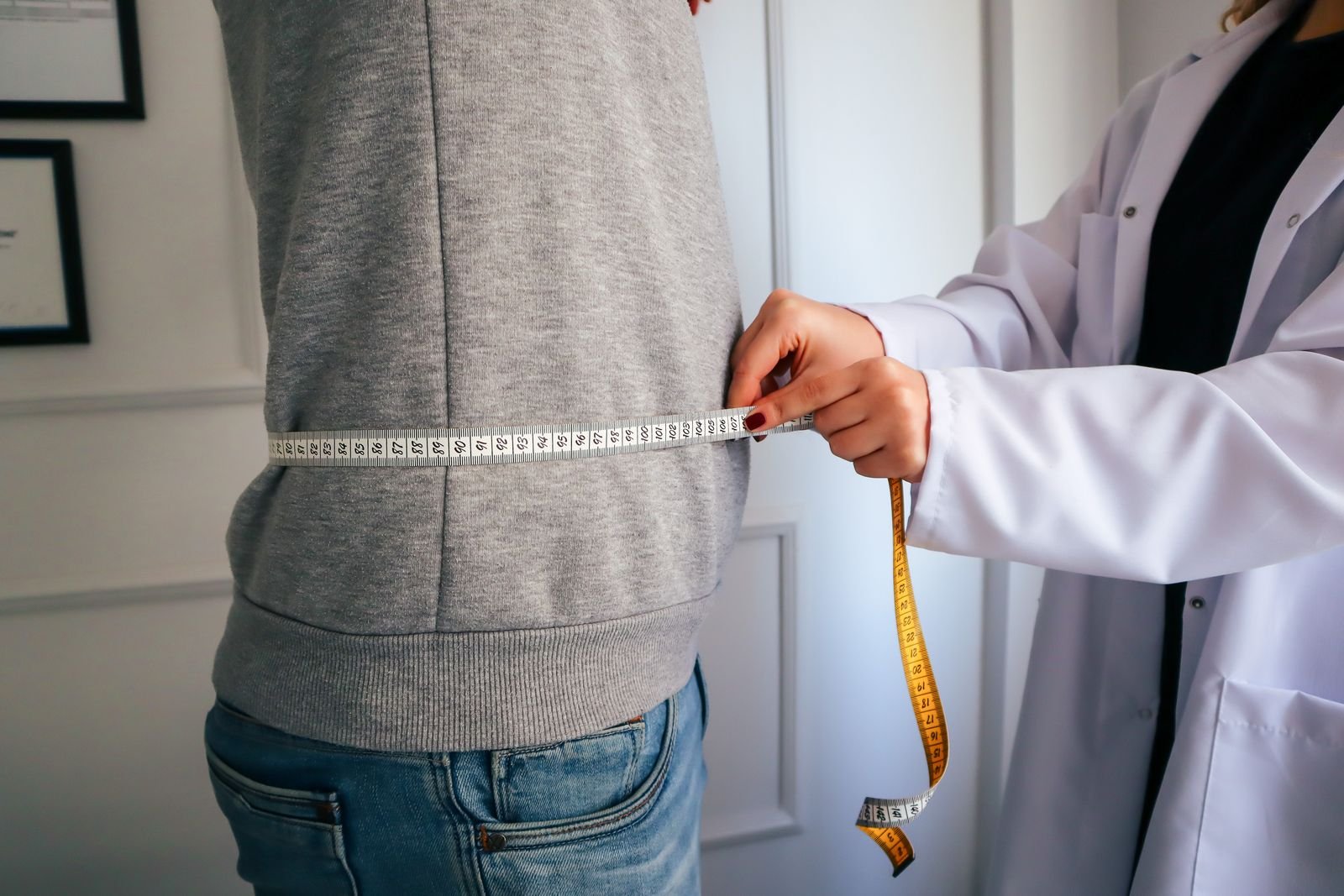
Obesity and low testosterone are tightly linked, and in many men the weight comes first: visceral fat lowers SHBG, raises estradiol and dampens the brain’s LH signal, so the testes make less testosterone. The encouraging part is that this pattern is often reversible. In a 2013 meta-analysis of 24 studies, total testosterone rose by about 2.9 nmol/L (roughly 83 ng/dL) after low-calorie diets and about 8.7 nmol/L (roughly 252 ng/dL) after bariatric surgery, and the more weight men lost, the more testosterone went up.
That matters for your decision because it changes what “low T” means. If your number is low mainly because of excess weight, the right first question is not only “which testosterone treatment?” but “how much of this is the weight, and what happens if I lose it?” The answer affects whether you need hormone treatment at all, which kind makes sense, and what to expect from your labs over the next six to twelve months.
Key takeaways
- Obesity-related low testosterone is usually “functional”: the testes work, but the brain sends a weaker LH signal and SHBG is low.
- In the Corona 2013 meta-analysis, diet raised total T by 2.87 nmol/L and bariatric surgery by 8.73 nmol/L; weight lost was the best predictor of the rise.
- In the European Male Ageing Study, free testosterone changed meaningfully only in men who gained or lost 15% or more of body weight.
- Early data on GLP-1 and tirzepatide weight loss show testosterone rising too, but most of that evidence is observational.
How obesity lowers testosterone: the mechanism in plain English
Testosterone production runs on a feedback loop called the hypothalamic-pituitary-gonadal (HPG) axis. The hypothalamus releases GnRH, the pituitary responds with LH and FSH, and LH tells the Leydig cells in the testes to make testosterone. When testosterone and estradiol are high enough, the brain eases off. Excess fat, especially the visceral fat packed around the abdominal organs, interferes with this loop in at least three ways.
1. Lower SHBG pulls total testosterone down
Most testosterone in your blood rides on a carrier protein called sex hormone-binding globulin (SHBG). Insulin resistance, which travels with abdominal obesity, suppresses SHBG production in the liver. Less SHBG means less bound testosterone, so your total testosterone reading drops even if the small free fraction is less affected. This is why a man with a large waist can have a low total T and a free T that is only borderline. If that describes your labs, our guide to total vs. free testosterone explains how to read the two together.
2. Fat tissue converts testosterone to estradiol
Adipose tissue contains aromatase, the enzyme that turns testosterone into estradiol. More fat means more conversion. Estradiol is a normal and necessary hormone in men, but it is also one of the signals the hypothalamus and pituitary read as “enough,” so higher levels can quiet LH output. Supporting this, the Corona meta-analysis found that weight loss was associated with lower estradiol and higher gonadotropin (LH and FSH) levels, which is exactly what you would expect if the brake is released. (That does not mean estradiol should be driven down with medication; men need a healthy amount of it.)
3. Inflammation, insulin and sleep blunt the brain’s signal
Visceral fat is metabolically active. It releases inflammatory signals and is tied to insulin resistance and high leptin, all of which are thought to suppress GnRH and LH release. Obesity also raises the risk of obstructive sleep apnea, which fragments sleep and independently lowers testosterone; we cover that in detail in sleep, sleep apnea and testosterone. The net effect is a hypogonadotropic pattern: low testosterone with an LH level that is low or “inappropriately normal” for how low the testosterone is.
The Corona group titled their 2013 meta-analysis plainly: weight loss “reverts obesity-associated hypogonadotropic hypogonadism.” Endocrinologists Mathis Grossmann and Alvin Matsumoto describe this as functional hypogonadism, low testosterone driven by potentially reversible conditions such as obesity and related illness rather than by damage to the testes or pituitary, and they argue for addressing those conditions as the foundation of care.
What the studies show about weight gain, weight loss and testosterone
The European Male Ageing Study: weight change outpaced age
The European Male Ageing Study (EMAS) followed 2,736 community-dwelling men aged 40 to 79 across eight European centers for an average of 4.4 years (Camacho et al., 2013). Across the whole group, total testosterone fell by an average of only 0.1 nmol/L per year, a small age effect. What moved the numbers more was weight. Weight loss was associated with proportional rises in testosterone and SHBG, and weight gain with proportional falls. Free testosterone behaved differently: it changed significantly only in men who gained or lost 15% or more of their body weight. The authors concluded that obesity-related hormone changes appear reversible with weight reduction.
The practical reading: modest weight loss tends to show up first in total testosterone and SHBG. A meaningful shift in free testosterone may take a larger loss, in the range of 15% of body weight.
The Corona 2013 meta-analysis: more weight lost, more testosterone gained
Corona and colleagues screened 266 articles and pooled 24 studies of men losing weight by low-calorie diet or bariatric surgery. Both approaches significantly raised total testosterone, including both SHBG-bound and unbound testosterone. In a regression analysis, the amount of weight lost was the strongest predictor of the testosterone rise. The rise was also larger in men who were younger, did not have diabetes, and started with more severe obesity.
Newer data with GLP-1 medications and tirzepatide
Medication-assisted weight loss appears to follow the same pattern, though the evidence is earlier-stage. A 2026 systematic review of 29 studies in men with obesity-related functional hypogonadism reported mean total testosterone increases of 2.5 to 5.2 nmol/L with GLP-1 receptor agonists and tirzepatide. At ENDO 2025, researchers at SSM Health Saint Louis University Hospital reported an electronic health record analysis of 110 men with obesity or type 2 diabetes on semaglutide, dulaglutide or tirzepatide: the share with normal total and free testosterone rose from 53% to 77% over 18 months, alongside about 10% weight loss. These are mostly observational or small studies, so they show association, not proof that the drugs themselves raised testosterone. Our article on tirzepatide for men goes through that evidence in more detail.
How much testosterone can weight loss restore? The numbers side by side
Conversions use 1 nmol/L = about 28.8 ng/dL. These are average changes in study populations, not predictions for any one man.
| Source and approach | Average change in total testosterone | Quality of evidence |
|---|---|---|
| Low-calorie diet (Corona 2013 meta-analysis) | +2.87 nmol/L (about +83 ng/dL) | Pooled clinical studies |
| Bariatric surgery (Corona 2013 meta-analysis) | +8.73 nmol/L (about +252 ng/dL) | Pooled clinical studies |
| GLP-1 receptor agonists and tirzepatide (2026 systematic review, 29 studies) | +2.5 to +5.2 nmol/L (about +72 to +150 ng/dL) | Mostly observational and small trials |
| Weight change in aging men (EMAS, 4.4 years) | Total T and SHBG moved with weight; free T shifted significantly only with 15% or greater change | Prospective population cohort |
To put the diet number in context: a man with a morning total testosterone of 250 ng/dL who gains the average diet-study increase would land around 330 ng/dL, just above the 300 ng/dL cutoff the American Urological Association uses for low testosterone. A man starting at 180 ng/dL would likely still be low. That arithmetic is why baseline level matters when you decide whether to wait for weight loss alone. For how the cutoffs are set, see what counts as low testosterone.
Is your low T from obesity? What your lab pattern means
Not every man with a large waist and low testosterone has the functional, weight-driven kind. The lab pattern helps sort it out. Testing should be done in the morning and repeated before anyone draws conclusions.
- Low total T, low SHBG, free T borderline or normal, LH low-normal: the classic obesity pattern. Much of the low total number may be the SHBG effect. Weight loss is the most direct lever.
- Low total T, low free T, LH low or “normal” despite low T: a secondary (hypogonadotropic) pattern. Obesity is a common cause, but a licensed provider may also look at prolactin, other pituitary hormones, medications such as opioids, and sleep apnea.
- Low total T with high LH and FSH: the testes are not responding to a strong signal (primary hypogonadism). Weight loss alone is less likely to fix this. Our guide to primary vs. secondary hypogonadism explains why LH decides the options.
- Estradiol on the higher side of normal with a large waist: consistent with more aromatase activity in fat tissue, and one of the values that typically comes down as weight comes off.
Symptoms matter as much as numbers. In EMAS, the symptoms most consistently linked to low testosterone in men aged 40 to 79 were sexual: poor morning erections, low sexual desire and erectile dysfunction. Fatigue and low mood are real but less specific, and both are also common with obesity, poor sleep and depression.
Treating obesity-related low testosterone: what the options do
Weight loss first, measured properly
Because weight lost was the best predictor of testosterone rise in the Corona analysis, the size of the loss matters more than the method. Low-calorie diets in those studies produced smaller average gains than surgery largely because they produced smaller weight losses. For men who have struggled to lose weight through diet alone, prescription weight-loss medication is one option a licensed provider may discuss. Through our weight program, a licensed provider can evaluate whether a medication such as tirzepatide is appropriate. Zepbound (tirzepatide) is FDA-approved for chronic weight management, and Mounjaro (tirzepatide) for type 2 diabetes. When tirzepatide is compounded, it is not FDA-approved, and compounded medications are not FDA-reviewed for safety, effectiveness or quality.
Protecting muscle during that weight loss matters, partly because lean mass is metabolically useful and partly because you want the scale to reflect fat. Our guide to losing weight on a GLP-1 without losing muscle covers protein targets and resistance training.
Where hormone treatment fits
Some men have symptoms and testosterone levels low enough that waiting months for weight loss is not reasonable, or they have lost weight and remain low. In those cases a licensed provider may discuss treatment. The choice depends heavily on fertility goals. Testosterone therapy suppresses LH and FSH and can reduce sperm production. Enclomiphene works upstream, blocking estrogen’s feedback at the hypothalamus so the pituitary releases more LH and FSH, which is one reason it is sometimes considered in men with the secondary pattern typical of obesity. Enclomiphene is not FDA-approved for any use; when prescribed in the US it is compounded, and compounded medications are not FDA-reviewed for safety, effectiveness or quality. Long-term safety data are limited. Treatment is prescribed only if a licensed provider decides it is appropriate.
The Endocrine Society’s 2018 guideline on testosterone therapy, and Grossmann and Matsumoto’s 2017 review of functional hypogonadism, both emphasize confirming the diagnosis with repeated morning testing and addressing contributing conditions. Treatment of low testosterone does not replace treatment of the weight itself.
The other levers that compound the effect
- Sleep apnea: if you snore, wake unrefreshed or have been told you stop breathing at night, getting evaluated can matter for both weight and testosterone.
- Alcohol: heavy drinking lowers testosterone and adds calories, so cutting back helps on both fronts.
- Blood sugar: in the Corona analysis, men without diabetes saw larger testosterone rises with weight loss, so tightening glucose control is part of the picture for men with diabetes.
A realistic timeline for testosterone after weight loss
Studies do not give a precise week-by-week curve, but the pattern across them is consistent enough to plan around:
- Baseline: two morning total testosterone tests on different days, plus LH, SHBG and estradiol, give you a reference point and a pattern.
- First 5% to 10% of weight lost: expect any change to show up mainly in total testosterone and SHBG. In the diet studies Corona pooled, the average gain was under 3 nmol/L.
- Around 15% or more: this is where EMAS saw free testosterone change significantly, and where larger total testosterone gains become more plausible.
- Re-test after a meaningful loss: repeat the same labs, at the same time of day, so you compare like with like. If testosterone and symptoms have normalized, hormone treatment may not be needed.
Regaining the weight tends to reverse the gains. EMAS found the relationship ran in both directions, with weight gain associated with proportional falls in testosterone and SHBG.
Questions to ask your provider
- Is my LH low, normal or high relative to my testosterone, and does that point to a weight-related (secondary) pattern?
- What are my SHBG and free testosterone, and how much of my low total number is explained by low SHBG?
- Given my starting level, is it reasonable to try weight loss first, and for how long?
- Should I be screened for sleep apnea or diabetes?
- If I need treatment, how does each option affect fertility, and what labs will we repeat and when?
Frequently asked questions
Does belly fat lower testosterone?
Yes, abdominal fat is associated with lower testosterone through lower SHBG, more conversion of testosterone to estradiol, and a weaker LH signal from the pituitary. In EMAS, weight gain over about four years was associated with proportional falls in testosterone and SHBG.
How much weight do I need to lose to raise testosterone?
There is no fixed number, but more loss tends to mean a larger rise. In EMAS, free testosterone changed significantly only with a 15% or greater change in body weight, while total testosterone and SHBG moved more gradually.
Can low testosterone cause weight gain?
The relationship appears to run both ways, which is why it is often described as a cycle: excess fat lowers testosterone, and low testosterone is associated with more fat and less lean mass. The weight-loss studies show the cycle can be interrupted from the weight side.
Does testosterone therapy help with weight loss?
Testosterone therapy is not an approved weight-loss treatment, and it does not address the causes of obesity-related low testosterone. Guidelines favor confirming the diagnosis and treating the underlying weight and metabolic issues, with hormone treatment considered case by case.
If your labs show low testosterone and you are carrying extra weight around the middle, a licensed provider can help you sort out how much is weight-driven and what to do first. You can book a free consultation with a licensed provider from our clinical partner, The Tide Clinic, to review your labs and options.
References
- Corona G, Rastrelli G, Monami M, et al. Body weight loss reverts obesity-associated hypogonadotropic hypogonadism: a systematic review and meta-analysis. Eur J Endocrinol. 2013;168(6):829-843. PubMed 23482592
- Camacho EM, et al. Age-associated changes in hypothalamic-pituitary-testicular function in middle-aged and older men are modified by weight change and lifestyle factors: longitudinal results from the European Male Ageing Study. Eur J Endocrinol. 2013. PubMed 23425925
- Grossmann M, Matsumoto AM. A perspective on middle-aged and older men with functional hypogonadism: focus on holistic management. J Clin Endocrinol Metab. 2017. PubMed 28359097
- Wu FCW, et al. Identification of late-onset hypogonadism in middle-aged and elderly men. N Engl J Med. 2010;363(2):123-135. PubMed 20554979
- Bhasin S, et al. Testosterone therapy in men with hypogonadism: an Endocrine Society clinical practice guideline. J Clin Endocrinol Metab. 2018. PubMed 29562364
- Mulhall JP, et al. Evaluation and management of testosterone deficiency: AUA guideline. J Urol. 2018. PubMed 29601923
- Effects of incretin-based therapies on testosterone levels and incretin response in men with hypogonadism: a systematic literature review. Pharmaceuticals (Basel). 2026. doi:10.3390/ph19081321
- Endocrine Society. ENDO 2025 news release on GLP-1 and tirzepatide treatment and testosterone in men with obesity or type 2 diabetes (Portillo Canales S, et al.). July 14, 2025. EurekAlert
This article is for education only and is not medical advice. It does not replace an evaluation by a licensed provider, who can tell you whether any test or treatment is appropriate for you. Enclomiphene is not FDA-approved. Compounded medications are not FDA-reviewed for safety, effectiveness, or quality. Results vary.